We Buy Collectible Coins & Banknotes


2 lepta 1819 Ionian Islands MS62 BN NGC
400,00 €
Greek copper coin 2 Lepta, Ionian Islands, dated 1819 (1819.). Venetian lion. Britannia seated left.
| Issuer | Ionian Islands › United States of the Ionian Islands (1815-1864)  |
|---|---|
| King | George III (1810-1820) |
| Type | Standard circulation coin |
| Years | 1819-1820 |
| Value | 2 Lepta (½) |
| Currency | Obol (1819-1834) |
| Composition | Copper |
| Weight | 4.72 g |
| Diameter | 22 mm |
| Thickness | 6 mm |
| Shape | Round |
| Technique | Milled |
| Orientation | Coin alignment ↑↓ |
| Demonetized | Yes |
In stock
Related products




20.000 drachmas Italian Invasion of Greece 1990 PF69 ULTRA CAMEO NGC
Greek commemorative gold proof coin with a face value of 20,000 drachmas, for the 50th anniversary of the NO of 1940, Italian Invasion, maximum number of 1000 pieces, Bank of Greece mint, issued in 1990.
VIDEO
| Issuer | Greece  |
|---|---|
| Ruling authority | Third Hellenic Republic (1974-date) |
| Type | Non-circulating coins |
| Year | 1990 |
| Value | 20 000 Drachmes (20 000 GRD) |
| Currency | Third modern drachma (1954-2001) |
| Composition | Gold (.900) |
| Weight | 8 g |
| Diameter | 24 mm |
| Shape | Round |
| Technique | Milled |


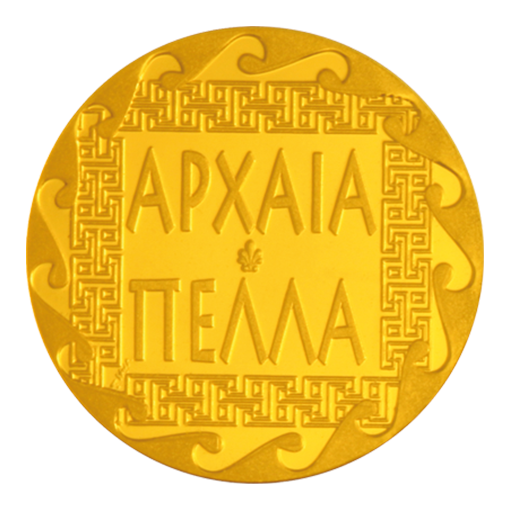

50 euro 2012 Proof Ancient Pella
Greek collectible gold proof coin with a face value of 50 euros, for Ancient Pella where it became the capital of the Macedonian state at the end of the 5th - beginning of the 4th century BC, maximum number of pieces 4,000, mint Bank of Greece, issue in 2012.
The photo is indicative, the coin you will receive is in the original box along with the certificate of authenticity.
Pella supplanted Aigai as the capital of the Macedonian state at the turn of the 5th and 4th centuries BC and soon evolved into a major political, economic and cultural centre in Greece. The birthplace of Alexander the Great, Pella reached its peak during the Hellenistic period. The rich archaeological finds, notably the palace complex, temples and sumptuous private houses, provide a wealth of information about the city’s layout, architecture and economic life. The mosaic floors and the wall-paintings, rare surviving samples of ancient Greek painting, attest to the prosperity of the city and its inhabitants. Pella fell to the Romans in 168/167 BC and began to lose importance once the seat of the Roman province of Macedonia, created in 148 BC, was transferred to Thessaloniki. Pella was destroyed by an earthquake, most probably in the early 1st century BC.
| Issuer | Greece |
|---|---|
| Ruling authority | Third Hellenic Republic (1974-date) |
| Type | Non-circulating coins |
| Year | 2012 |
| Value | 50 Euros (50 EUR) |
| Currency | Euro (2002-date) |
| Composition | Gold (.999) |
| Weight | 1.00 g |
| Diameter | 14.00 mm |
| Shape | Round |
| Technique | Milled |
| Orientation | Medal alignment ↑↑ |